TL;DR: There is no single flat price for indoor air quality testing in Kingsburg because the cost depends on how many rooms get sampled, whether a VOC or formaldehyde panel gets added to the basic screening, and how fast you need lab results back. A simple walkthrough with a handheld air quality meter costs less than a full assessment with lab-analyzed samples and a written report. The only way to get an accurate number for your home is a written scope before any sampling starts.
If you just moved into a newer home near Kingsburg and the smell of new cabinetry or fresh carpet hasn’t faded after a few weeks, or you’re renovating a 1960s farmhouse near downtown’s Swedish-themed district and want to know what’s in the air before the kids move back in, the question is the same: what does this actually cost, and what am I paying for? The answer depends less on the city and more on the scope of the test itself.
How Much Does Indoor Air Quality Testing Cost in Kingsburg?
Indoor air quality testing cost in Kingsburg varies by scope: a basic screening that measures particulates, carbon dioxide, humidity, and temperature with a calibrated handheld meter costs less than a comprehensive assessment that adds lab-analyzed air samples and a written report comparing your indoor readings to an outdoor baseline.
Most homeowners are really asking one of two things: “what’s wrong with the air in this specific room” or “should I be worried about something in a new build or a recent remodel.” Those are different jobs. A screening tells you whether CO2, humidity, or particulate levels are elevated right now. A full assessment with lab samples tells you what compounds are actually present, which takes longer and costs more because of the lab analysis fee on top of the site visit.
Because pricing depends on your home’s size, how many rooms raise a concern, and what’s prompting the test, a legitimate quote only comes after someone understands your situation. Treat any number you see online, including ranges on this page, as a starting point for a conversation, not a locked-in price.
What Actually Drives the Price Up or Down?
Four factors move an indoor air quality testing quote more than anything else: how many sample locations are needed, whether a VOC or formaldehyde panel is added, how fast you need lab results, and whether the visit includes a written report.
Number of sample locations. Testing one bedroom where a baby’s crib sits costs less than testing a whole house with a finished basement, an attached garage, and an HVAC system that distributes air between all three. More locations means more sample media and more lab line items.
VOC or formaldehyde add-on panels. A basic particulate and CO2 screening is a different test than a volatile organic compound (VOC) or formaldehyde panel, which requires specific sorbent tubes or passive badges sent to an accredited lab for analysis. If new flooring, cabinetry, or paint is the concern, this add-on is usually what actually answers the question, and it adds its own line item to the invoice.
Lab turnaround speed. Standard lab turnaround runs several business days; rushing results for a closing deadline or a health concern typically costs more because the lab reprioritizes your samples ahead of the standard queue.
Scope of the report. A verbal summary of meter readings costs less than a written report with lab data, an outdoor baseline comparison, and documentation suitable for a landlord, buyer, or insurance file.
What’s Actually Included in an Indoor Air Quality Assessment?
A full indoor air quality assessment combines real-time instrument readings with lab-analyzed samples, not just a single meter reading taken at the front door.
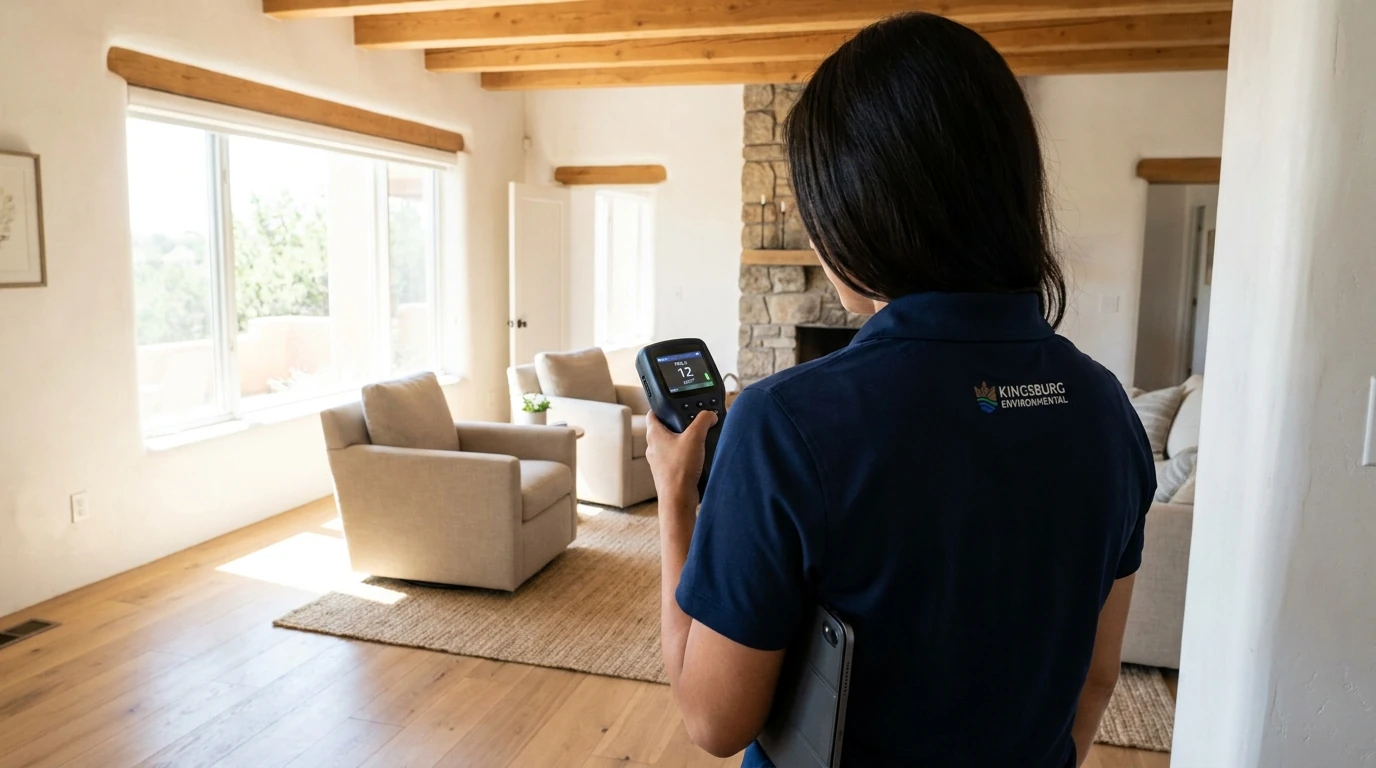
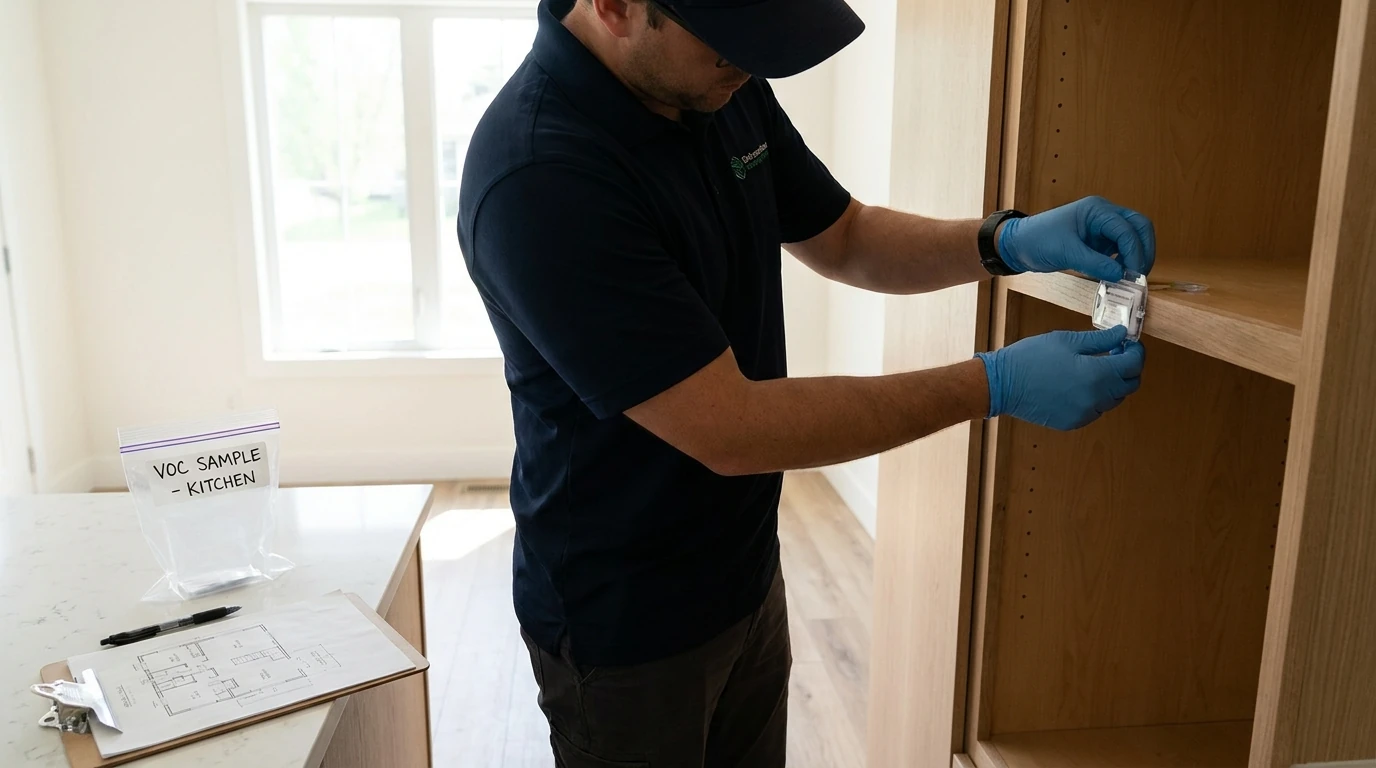
The inspector typically starts with a walkthrough using a handheld particle counter and IAQ monitor to log baseline readings for particulate matter, carbon dioxide, temperature, and relative humidity in each concern area. If VOCs or formaldehyde are part of the scope, sampling media gets deployed and left in place for a set period, often several hours, before it’s sealed and sent to an EPA-recognized accredited laboratory for analysis.
An outdoor baseline reading is taken too. Indoor readings only mean something in comparison to what’s happening outside that day, since Central Valley agricultural dust and seasonal ag-burn smoke can push outdoor particulate levels up independent of anything happening inside your home. A written report ties the indoor numbers, the outdoor baseline, and any lab results together so you have something concrete to act on, whether that means adjusting ventilation or calling a contractor for source removal.
If you’re trying to figure out which symptoms point to which test, 7 Signs of Bad Indoor Air Quality walks through how specific complaints (headaches, a persistent musty smell, visible condensation) map to specific instruments.
When Does a VOC or Formaldehyde Panel Make Sense?
A VOC or formaldehyde panel makes sense when the air quality concern traces back to new materials: fresh paint, new cabinetry, engineered wood flooring, or a recently completed remodel.
Formaldehyde is commonly used as a binding agent in pressed-wood products like particleboard and some cabinetry, and it off-gasses most heavily in the weeks and months after installation. If you moved into new construction in one of Kingsburg’s newer subdivisions and the smell hasn’t faded, or you just finished a kitchen remodel and someone in the house is more sensitive to odors than usual, a formaldehyde-specific panel gives you a number instead of a guess.
A basic particulate and CO2 screening won’t catch this. VOCs and formaldehyde require their own sampling media and their own lab analysis line, which is exactly why this gets priced as an add-on rather than bundled automatically into every visit.
How Do I Get an Accurate Price for My Home?
The only way to get an accurate price is a short conversation about what’s prompting the test, followed by a written scope before any sampling begins.
Describe what you’re noticing (a smell, a symptom, a timeline tied to new construction or a remodel) and whether you need documentation for a landlord, a buyer, or your own peace of mind. That conversation determines how many locations need sampling, whether a VOC or formaldehyde panel belongs in the scope, and how fast you need the lab results back. Arch Environmental Group LLC provides a written scope before work starts, so you know exactly what’s being tested and why before anything is scheduled.
Because the company only performs testing and does not profit from remediation work, the report comes back the same way regardless of what it finds. If results do point to a source that needs addressing, that’s a conversation for a qualified, independent contractor, with a return visit for clearance testing once the work is done.
If a musty smell is part of what’s prompting the call, it’s worth knowing the difference between an air sample and a surface sample first; Air Sampling vs Surface Sampling for Mold breaks down which one actually answers which question.
About Arch Environmental Group LLC
Arch Environmental Group LLC is an independent environmental testing company based in Kingsburg, CA, founded in 2026. The team holds certification as a Certified Asbestos Consultant, Lead Inspector Assessor, and NIOSH 582 Microscopist, and handles indoor air quality testing, VOC and formaldehyde testing, mold inspection, asbestos testing, lead paint testing, and related environmental assessments across the Central Valley. All lab samples are analyzed by accredited third-party laboratories, and the company is licensed and insured.
Need help now? Call Arch Environmental Group LLC at (559) 296-2088.