
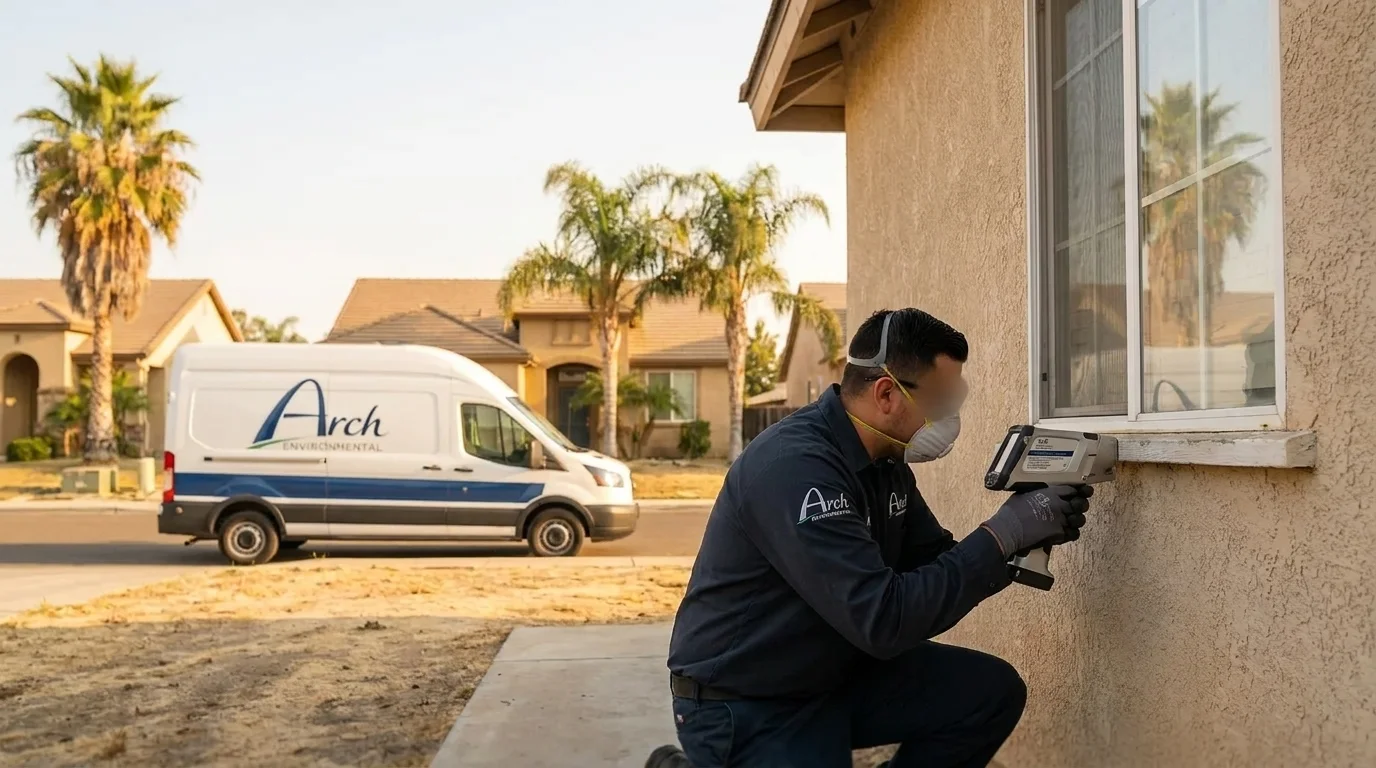
Lead Paint Testing and Inspection in Kingsburg
Professional lead paint testing and inspection in Kingsburg and surrounding areas. Independent inspections, accredited lab analysis, clear written reports. Call (559) 296-2088.
You’re planning a renovation on a home built before 1978, or maybe a buyer’s inspection flagged lead-based paint as a concern. The problem isn’t visible, lead paint often hides under layers of newer paint, on window sills worn smooth by decades of use, or on door frames rubbed to a fine dust every time the door swings. Without a formal lead paint inspection or risk assessment, you’re guessing. And when contractors start cutting, sanding, or demolishing, that guess becomes a health exposure for your family or your workers.
What lead paint testing and inspection actually involves
Lead paint testing is not a single swab on a wall. A thorough inspection covers every painted, coated, or varnished surface in the structure, walls, trim, windows, doors, ceilings, exterior siding, porches, and outbuildings if present. The two primary methods are XRF (X-ray fluorescence) analysis and paint chip sampling sent to an accredited laboratory.
XRF lead testing is the industry standard for most inspections. A handheld XRF analyzer reads lead concentration through multiple paint layers without damaging the surface, producing a result in seconds. It can distinguish between a substrate that is genuinely lead-free and one where a lead layer is buried under several coats of modern paint, exactly the scenario that a simple swab kit misses entirely.
A lead risk assessment goes further. In addition to surface testing, it evaluates dust wipe samples from floors, window wells, and sills, the places where deteriorating lead paint accumulates as fine particles, and soil samples from areas around the building’s drip line. The output is a written report that identifies hazards by location, rates their severity, and recommends specific remediation or interim controls.
Timeline for a typical single-family residence: a lead inspection or risk assessment usually takes two to four hours on-site, with laboratory results for any chip or dust samples returned within a few business days. XRF readings are available immediately.
Our process
-
Pre-inspection documentation review. Before arriving on-site, we review available records, year of construction, prior renovation permits, any existing lead reports. Homes built before 1940 in California’s Central Valley were almost universally painted with lead-based products; homes built between 1940 and 1978 carry declining but still significant risk. This step shapes which surfaces get priority attention.
-
Systematic surface-by-surface XRF testing. Every distinct painted component is tested with the XRF analyzer. Results are logged by room, surface type, and substrate. We follow the sampling protocols established under EPA’s lead inspection regulations so the report is defensible for permit applications, real estate transactions, and contractor compliance.
-
Dust wipe and paint chip sampling (when indicated). Where XRF readings are inconclusive, certain substrates can interfere with the fluorescence reading, or where a risk assessment is requested, we collect dust wipe samples from horizontal surfaces and paint chip samples from deteriorated areas. These go to an accredited laboratory for confirmation.
-
Written report with component-by-component findings. You receive a formal report that maps every tested surface, records the lead concentration or laboratory result, and classifies each component as lead-free, lead-containing, or a lead hazard. The report meets the documentation requirements for EPA’s Renovation, Repair, and Painting (RRP) Rule, HUD guidelines, and California’s CDPH lead regulations.
-
Findings walkthrough and next-step guidance. We walk through the results with you, what needs remediation before work begins, what can be managed with encapsulation or interim controls, and what is genuinely safe to disturb. You leave with a clear picture of what your contractor needs to know before the first tool touches a wall.
What separates a good lead inspection from a bad one
The most common failure in lead testing is incomplete surface coverage. An inspector who tests only the most visibly deteriorated surfaces will miss lead paint in good condition that becomes a hazard the moment a renovation crew starts cutting. Under the EPA RRP Rule, contractors working in pre-1978 housing must follow lead-safe work practices based on whether lead is present, not whether it is currently peeling, so an incomplete inspection creates liability for everyone downstream.
A second frequent problem is relying exclusively on consumer swab kits. Sodium rhodizonate and sodium sulfide swabs can detect the presence of lead at the surface, but they cannot read through paint layers, cannot quantify concentration, and produce results that no permitting authority or lender will accept as a formal inspection.
Experienced inspectors also know where lead paint hides that casual testing misses: the interior surfaces of window channels (ground to dust by decades of operation), porch floors and railings, radiator enclosures, and the exterior of older steel doors. A thorough lead inspection follows a component-by-component protocol precisely because the hazardous surfaces are not always the obvious ones.
For real estate transactions, lenders and title companies increasingly require a formal inspection report, not a contractor’s verbal assessment. A formal written inspection report, prepared to California CDPH standards, carries the regulatory weight those parties need.
What does lead paint testing and inspection cost?
Typical costs for lead paint testing and inspection vary by scope, the number of surfaces tested, whether laboratory analysis is required, and whether the engagement is a basic inspection or a full risk assessment with dust and soil sampling. Most homeowners pay somewhere in the ranges below; every property is different, and Arch Environmental Group provides a written scope before any work begins so you know exactly what is included.
| Scenario | Typical industry range |
|---|---|
| Single-room XRF inspection (pre-renovation) | $200 – $400 |
| Whole-house lead paint inspection, XRF only | $400 – $800 |
| Whole-house inspection with paint chip lab samples | $600 – $1,100 |
| Full lead risk assessment (surfaces, dust, soil) | $800 – $1,500 |
| Multi-unit residential building (per unit) | $150 – $350 per unit |
| Re-inspection / clearance testing post-remediation | $300 – $700 |
Homeowners insurance generally does not cover the cost of a lead paint inspection itself, it is a testing and assessment service, not a remediation of sudden damage. If lead hazards are discovered and remediation is required, coverage depends heavily on your specific policy and the circumstances of the loss; your insurance agent is the right starting point for that conversation.
Seasonal and regional considerations
In California’s Central Valley, the dry summers and low humidity that characterize the Kingsburg area accelerate paint deterioration on sun-exposed exterior surfaces, south- and west-facing siding, window sills, and porch railings tend to chalk and peel faster than in coastal climates. That deterioration turns intact lead paint into a dust and soil hazard more quickly than homeowners expect. If you are planning exterior work in spring or early summer before the heat peaks, getting a lead inspection done first is practical timing: contractors are available, surfaces are dry enough for accurate XRF readings, and you avoid the scenario of discovering a lead hazard mid-project.
The Central Valley’s older housing stock, particularly the bungalows and craftsman-era homes common in Kingsburg and the surrounding Kings and Fresno County communities, was built during the period of highest lead paint use. If your home predates 1960, assume lead is present somewhere until an inspection proves otherwise.
Service area
Arch Environmental Group is based in Kingsburg and provides lead paint testing and inspection throughout the surrounding communities, including Selma, Fowler, Reedley, Sanger, Dinuba, Visalia, Fresno, Hanford, and Tulare. If you are in Kings or Fresno County and need a certified lead inspection before a renovation, sale, or rental compliance review, call (559) 296-2088 to schedule.
Ready to know exactly what you’re dealing with before work begins? Call (559) 296-2088 to schedule your lead paint inspection with a California-certified Lead Inspector/Assessor.
Services We Handle
- Lead Paint Inspection
- Lead Testing
Frequently Asked Questions
What is the difference between a lead paint inspection and a lead risk assessment, and which one do I need?
How accurate is XRF lead testing compared to sending paint chip samples to a lab?
Does homeowners insurance cover lead paint testing and inspection?
My house was built in 1965 and I'm getting new windows installed. Does my contractor need a lead inspection report before starting?
What surfaces do lead inspectors actually test, and are there areas that are commonly missed?
Looking for the best lead paint testing and inspection company in Kingsburg?
Arch Enviornmental Group LLC provides lead paint testing and inspection in Kingsburg, CA and the surrounding area, and has served local property owners since 2026. Customers rate us 5.0 out of 5 stars across 34 Google reviews. Call (559) 296-2088 to schedule lead paint testing and inspection or request a free estimate.
Schedule Lead Paint Testing and Inspection
Independent, lab-verified testing across Kingsburg and California's Central Valley.
Related Coverage
- Our Environmental Testing Services
- Contact Arch Enviornmental Group LLC
- Lead Paint Testing and Inspection in Clovis
- Lead Paint Testing and Inspection in Dinuba
- Lead Paint Testing and Inspection in Fowler
- Lead Paint Testing and Inspection in Fresno
- Lead Paint Testing and Inspection in Reedley
- Lead Paint Testing and Inspection in Sanger
- Lead Paint Testing and Inspection in Selma
- Lead Paint Testing and Inspection in Visalia