
Allergen Testing in Tulare
Certified allergen testing in Tulare, CA. Independent inspections with accredited lab analysis. Call (559) 296-2088.
Our crews are dispatched from our Kingsburg, CA headquarters and respond quickly to projects across Tulare.
Tulare sits in the heart of the San Joaquin Valley, where summer temperatures regularly push past 100°F, agricultural dust drifts in from surrounding fields, and homes stay sealed tight against the heat for months at a time. That combination creates indoor environments where dust mite populations, pet dander, and pollen particulates can build to levels that standard cleaning never fully addresses. If you or someone in your household has been dealing with persistent sneezing, itchy eyes, or unexplained respiratory irritation, professional allergen testing is often the clearest way to identify what is actually circulating in your air and settling into your surfaces.
Why Tulare Properties See Elevated Allergen Levels
The San Joaquin Valley’s agricultural character shapes indoor air quality in ways that are easy to underestimate. Cotton, almond, and citrus operations surrounding Tulare generate fine particulate matter that infiltrates homes through window gaps, HVAC returns, and door seals. Once inside, those particles mix with the allergens that originate indoors: dust mite waste in bedding and upholstered furniture, pet dander in carpeting and wall cavities, and mold spores that colonize anywhere condensation forms during the valley’s cool, foggy winters.
Older housing stock in Tulare compounds the problem. Homes built before the 1980s often have single-pane windows, minimal weatherstripping, and ductwork that was never designed to filter fine agricultural particulates. Those gaps let outdoor allergens in while also allowing humidity fluctuations that favor dust mite reproduction. Dust mites thrive when relative humidity stays above roughly 50 percent, and Tulare’s tule fog season, which can keep outdoor humidity elevated for weeks, creates exactly those conditions inside poorly sealed homes.
Our Allergen Testing Process in Tulare
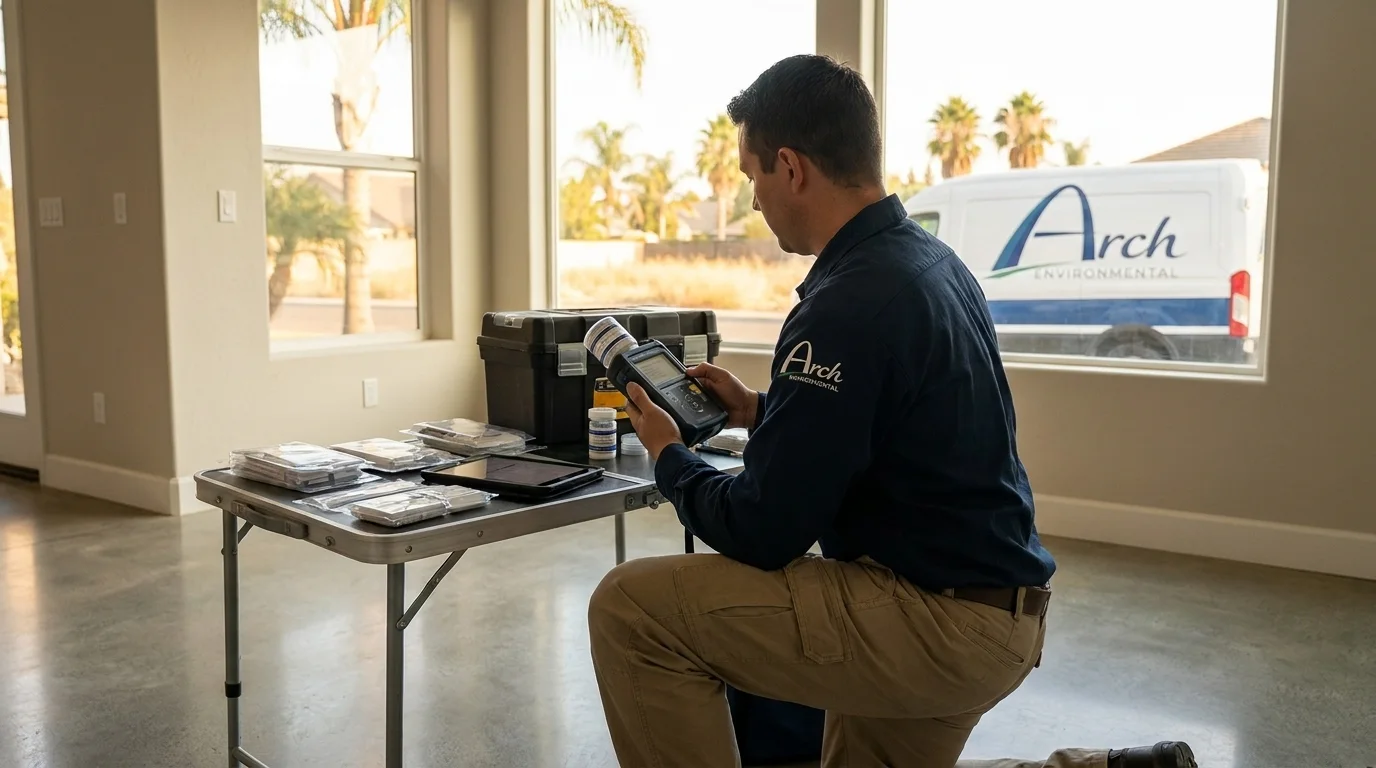
Allergen testing begins with a structured walkthrough of the property to identify the rooms and surfaces most likely to harbor concentrated allergen loads: bedrooms, living areas with upholstered furniture, HVAC vents, and any space where pets spend significant time. From there, dust samples are collected from settled surfaces using standardized wipe or vacuum techniques, depending on the surface type and what the analysis needs to capture.
Samples are analyzed for the most clinically relevant indoor allergens, including dust mite allergen (Der p 1 and Der f 1), cat and dog dander (Fel d 1 and Can f 1), cockroach allergen (Bla g 2), and mouse urinary protein where applicable. The laboratory report quantifies allergen levels in micrograms per gram of dust, giving you and your physician a concrete baseline rather than a subjective impression. Our team holds NIOSH 582 microscopist credentials and operates as a certified asbestos consultant and lead inspector assessor, so when a Tulare property presents multiple environmental concerns alongside allergen findings, we can assess the full picture in a single visit.
Reaching Tulare from Kingsburg
Arch Environmental Group is based in Kingsburg, which sits directly north of Tulare along Highway 99. The drive is straightforward, typically running south on 99 through Selma and Dinuba before reaching Tulare’s northern edge. Scheduling is handled by phone at (559) 296-2088, and we coordinate appointment windows that work around your household’s availability. Because allergen sampling does not require emergency access, we focus on setting a time that allows a thorough, unhurried walkthrough rather than a rushed visit.
Local Note
One pattern worth knowing in Tulare: homes with evaporative coolers, which are common throughout the valley because they cost less to operate than central air conditioning in dry summer heat, draw unfiltered outside air directly into the living space. During almond bloom in late February and early March, and again during cotton harvest in the fall, that unfiltered air carries significant pollen and fine dust loads. If your home uses a swamp cooler and allergen symptoms track with those agricultural seasons, the cooler’s intake and distribution points are among the first surfaces we sample. Replacing or upgrading the cooler’s filter media is a low-cost intervention that can meaningfully reduce the allergen burden those units introduce.
What to Expect After Testing
Once laboratory results are returned, you receive a written report that maps allergen concentrations by room and surface type. The report identifies which allergens are present above thresholds associated with sensitization risk and flags any areas where concentrations are high enough to warrant targeted remediation, such as deep cleaning of ductwork, encasement of bedding, or HVAC filter upgrades. The findings are documented in a format that your physician or allergist can use directly, and that insurers or landlords can review if the testing is connected to a habitability or health concern.
If you have questions about what the results mean for your specific situation in Tulare, call (559) 296-2088. We will walk through the findings with you and help you understand the practical next steps.
Serving Tulare from our Kingsburg headquarters — ★ 5.0 · 34 Google reviews
“Arch Environmental did mold testing at my place in Visalia. They were fast and great to work with.” — Alicia, September 2026Read our reviews on Google →
Allergen Testing in Tulare: Service Coverage
Frequently Asked Questions
How does Tulare's tule fog season affect indoor allergen levels, and is that a good time to schedule testing?
Are homes in Tulare with evaporative coolers more likely to show elevated pollen or agricultural dust allergens?
What allergens are most commonly found at elevated levels in Tulare-area homes?
How long does allergen testing take, and when will I receive the laboratory results?
Can allergen testing results be used to support a habitability complaint or a request to a Tulare landlord for remediation?
Allergen Testing in Tulare
Our crews are based in Kingsburg, CA and take on projects across Tulare. Call for a free estimate.