
Allergen Testing in Kingsburg
Certified allergen testing in Kingsburg and surrounding areas. Independent inspections, accredited lab analysis, clear written reports. Call (559) 296-2088.
You’ve cleaned the house, replaced the air filters, and kept the windows shut, but someone in your household still wakes up congested, rubs their eyes through dinner, or reaches for an inhaler more than they should. When symptoms persist without an obvious cause, the problem is often invisible: allergen loads embedded in carpet fibers, settled into upholstered furniture, or cycling through ductwork with every HVAC cycle. Allergen testing gives you a measured answer instead of a guess, identifying exactly what is present, where it is concentrated, and at what levels.
What allergen testing actually involves
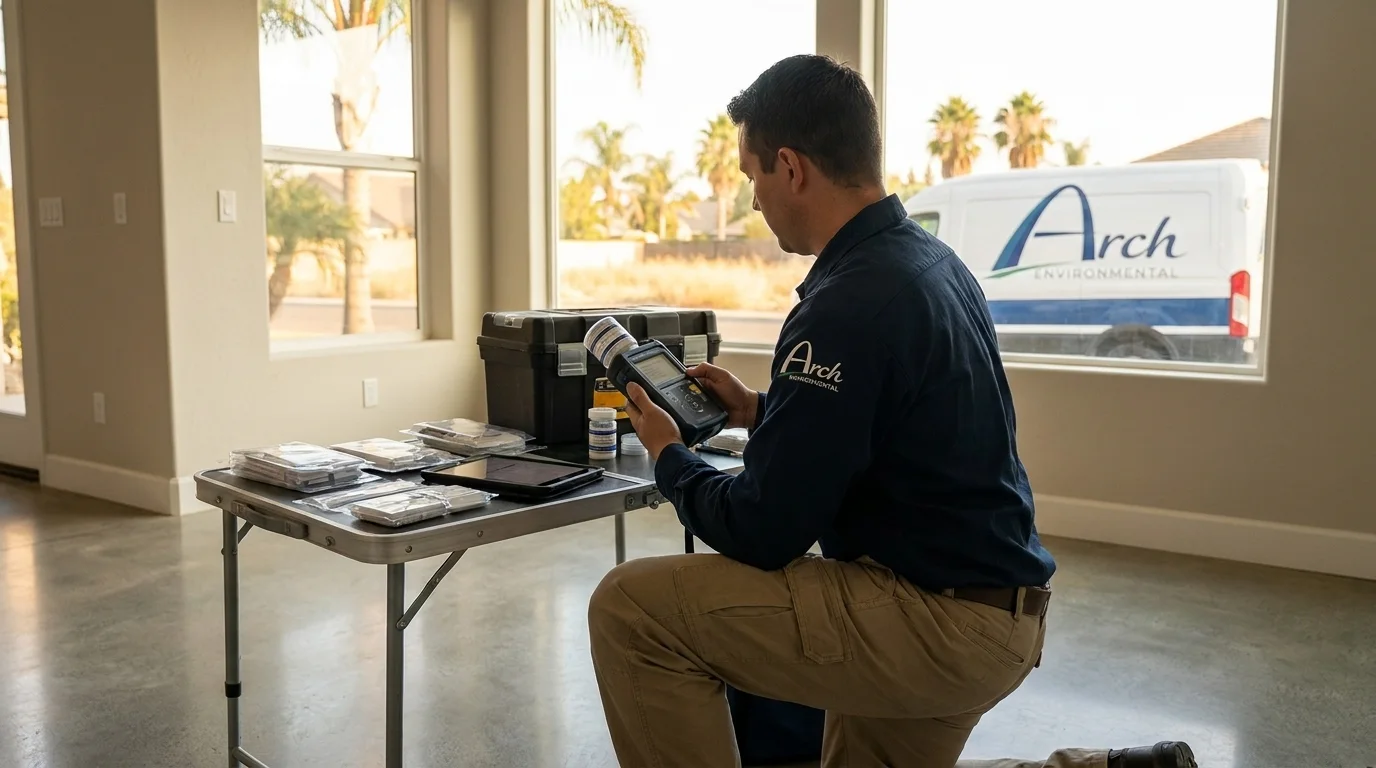
Allergen testing is a dust-sample and surface-sample discipline. A technician collects material from the places allergens actually accumulate, settled dust on hard surfaces, reservoir dust from carpets and upholstered furniture, and sometimes HVAC return grilles, and sends those samples to an accredited laboratory for quantified analysis. The lab reports back in micrograms of allergen per gram of dust (µg/g), a unit that corresponds to thresholds established by research on sensitization and symptom onset.
Common targets include dust mite allergens (Der p 1 and Der f 1, from Dermatophagoides pteronyssinus and D. farinae), cat allergen (Fel d 1), dog allergen (Can f 1), cockroach allergen (Bla g 2), and mouse urinary protein (Mus m 1). Each has a published threshold above which sensitized individuals are likely to experience symptoms. The test tells you not just whether the allergen is present, it tells you whether it is present at a level that matters clinically.
Sampling typically takes one to two hours for a standard residential assessment. Laboratory turnaround runs several business days depending on the panel selected. The result is a written report with room-by-room allergen concentrations and a comparison to established health-based benchmarks.
Our process
-
Pre-sampling interview and walkthrough. Before any samples are collected, the technician walks the property and asks about symptom patterns, which rooms, which times of day, whether symptoms improve when the occupant leaves the building. This shapes the sampling plan so the lab analysis targets the spaces most likely to explain what the household is experiencing.
-
Targeted dust and surface collection. Settled dust is collected from horizontal surfaces using standardized wipe or vacuum methods. Carpet and upholstered furniture samples are collected from high-contact areas using a template sampler that captures a consistent surface area, ensuring the results are comparable to published reference ranges. Samples are labeled, sealed, and logged with chain-of-custody documentation.
-
Accredited laboratory analysis. Samples are submitted to an accredited analytical laboratory for enzyme-linked immunosorbent assay (ELISA) testing, the method used in peer-reviewed allergen research and the one that produces quantified µg/g results rather than a simple positive/negative read. The panel is selected based on the walkthrough findings (pet history, pest history, building age, occupant sensitivities).
-
Written report with benchmark comparison. Results are delivered in a report that lists measured concentrations alongside the health-based thresholds for each allergen. Rooms or zones that exceed those thresholds are identified clearly. The report is formatted to be useful to a physician, an allergist, or a landlord, not just a technician.
-
Findings review and remediation guidance. A technician reviews the results with the client, explains what the numbers mean in plain language, and outlines the mitigation options appropriate to each allergen type, because the right response to a high dust mite load is different from the right response to persistent cat allergen or a cockroach indicator.
What separates a good allergen test from a bad one
The most common failure in allergen screening is using a qualitative test, one that reports only present or absent, when a quantified result is what actually drives a decision. A positive for dust mite allergen is nearly universal in occupied homes; what matters is whether the concentration exceeds 2 µg/g (the sensitization threshold) or 10 µg/g (the threshold associated with acute asthma exacerbation). Without a number, the result is clinically meaningless.
A second common problem is sampling only the most accessible surfaces rather than the reservoir locations where allergens actually accumulate. A wipe of a countertop tells you almost nothing about dust mite burden; a vacuum sample from the carpet in the bedroom where someone sleeps eight hours a night tells you a great deal. Sampling strategy determines whether the data is useful.
Finally, chain-of-custody documentation matters when results will be used for insurance claims, legal proceedings, landlord-tenant disputes, or physician referrals. Samples without documented handling history can be challenged. Every sample collected by Arch Environmental Group is logged with collection time, location, and collector identity from the moment it leaves the building.
What does allergen testing cost?
Typical costs for residential allergen testing depend on the size of the property, the number of allergens included in the panel, and whether the assessment is paired with an HVAC or IAQ evaluation. Most homeowners pay somewhere in the ranges below, these are industry-typical figures, not a quote from Arch Environmental Group.
| Scenario | Typical industry range |
|---|---|
| Single room, targeted single-allergen panel | $150 – $300 |
| Whole-home assessment, standard multi-allergen panel | $400 – $800 |
| Whole-home assessment with HVAC/duct sampling | $600 – $1,100 |
| Multi-unit residential (per unit, bulk pricing) | $250 – $500 per unit |
| Re-test after remediation (clearance sampling) | $200 – $450 |
| Expanded panel (mold, VOC, allergen combined) | $900 – $1,800 |
Every property is different, and Arch Environmental Group provides a written scope before any work begins. Standard homeowners insurance does not typically cover diagnostic environmental testing unless it is tied to a documented covered loss, but some health insurance plans and HSA accounts may reimburse allergen assessment costs when ordered in connection with a physician’s evaluation; check with your carrier and your doctor.
Seasonal and regional considerations
The San Joaquin Valley’s climate creates specific allergen conditions worth understanding. Hot, dry summers push residents to keep windows closed and run air conditioning continuously, which recirculates settled dust and can concentrate indoor allergen loads that would otherwise dissipate with ventilation. The region’s agricultural activity means outdoor allergen pressure (pollens, mold spores from irrigation and harvested crops) is high for much of the year, which can make it harder to distinguish indoor allergen problems from outdoor exposure without a measured indoor sample.
Older housing stock in Kingsburg and surrounding communities, much of it built before modern vapor barriers and tight building envelopes were standard, tends to have higher settled dust accumulation and, in homes with crawl spaces, conditions that favor dust mite populations. Homes with evaporative coolers rather than refrigerated air also introduce more outdoor particulate and humidity, which affects dust mite viability and allergen load.
Service area
Arch Environmental Group is based in Kingsburg and provides allergen testing throughout the surrounding San Joaquin Valley, including Fresno, Visalia, Hanford, Selma, Reedley, Sanger, Tulare, and Clovis. City-specific pages for each area link back to this page for full service detail.
If persistent symptoms in your home have gone unexplained, a quantified allergen screen is the clearest next step. Call Arch Environmental Group at (559) 296-2088 to schedule your indoor allergen assessment and get a written report you can take to your doctor, your landlord, or your insurance carrier.
Frequently Asked Questions
What is the difference between a dust mite allergen test and a general air quality test?
Does homeowners insurance cover allergen testing?
At what allergen concentration level should I be concerned?
Can allergen testing detect whether a previous pet lived in the home even after cleaning?
How should I prepare my home before allergen testing, and should I clean beforehand?
Looking for the best allergen testing company in Kingsburg?
Arch Enviornmental Group LLC provides allergen testing in Kingsburg, CA and the surrounding area, and has served local property owners since 2026. Customers rate us 5.0 out of 5 stars across 34 Google reviews. Call (559) 296-2088 to schedule allergen testing or request a free estimate.
Schedule Allergen Testing
Independent, lab-verified testing across Kingsburg and California's Central Valley.