
Post-Flood Mold Assessment in Easton
Certified post-flood mold assessment in Easton, CA. Independent inspections with accredited lab analysis. Call (559) 296-2088.
Our crews are dispatched from our Kingsburg, CA headquarters and respond quickly to projects across Easton.
Flooding in Easton, CA moves fast, and so does mold. The San Joaquin Valley’s warm temperatures and high summer humidity create conditions where mold colonies can begin establishing within 24 to 48 hours of standing water entering a structure. A post-flood mold assessment is not a precaution you schedule when it’s convenient, it’s a time-sensitive evaluation that determines whether your home is safe to occupy and whether remediation is actually necessary before walls get closed back up.
Why Easton Properties Face Elevated Mold Risk After Flooding
Easton sits in the heart of the Central Valley, where the combination of intense summer heat, periodic tule fog, and irrigation-fed soil moisture creates a climate that mold finds hospitable. When a flood event pushes water into a structure, the ambient warmth that makes the Valley comfortable in spring becomes the exact condition that accelerates microbial growth behind baseboards, beneath subfloor sheathing, and inside wall cavities.
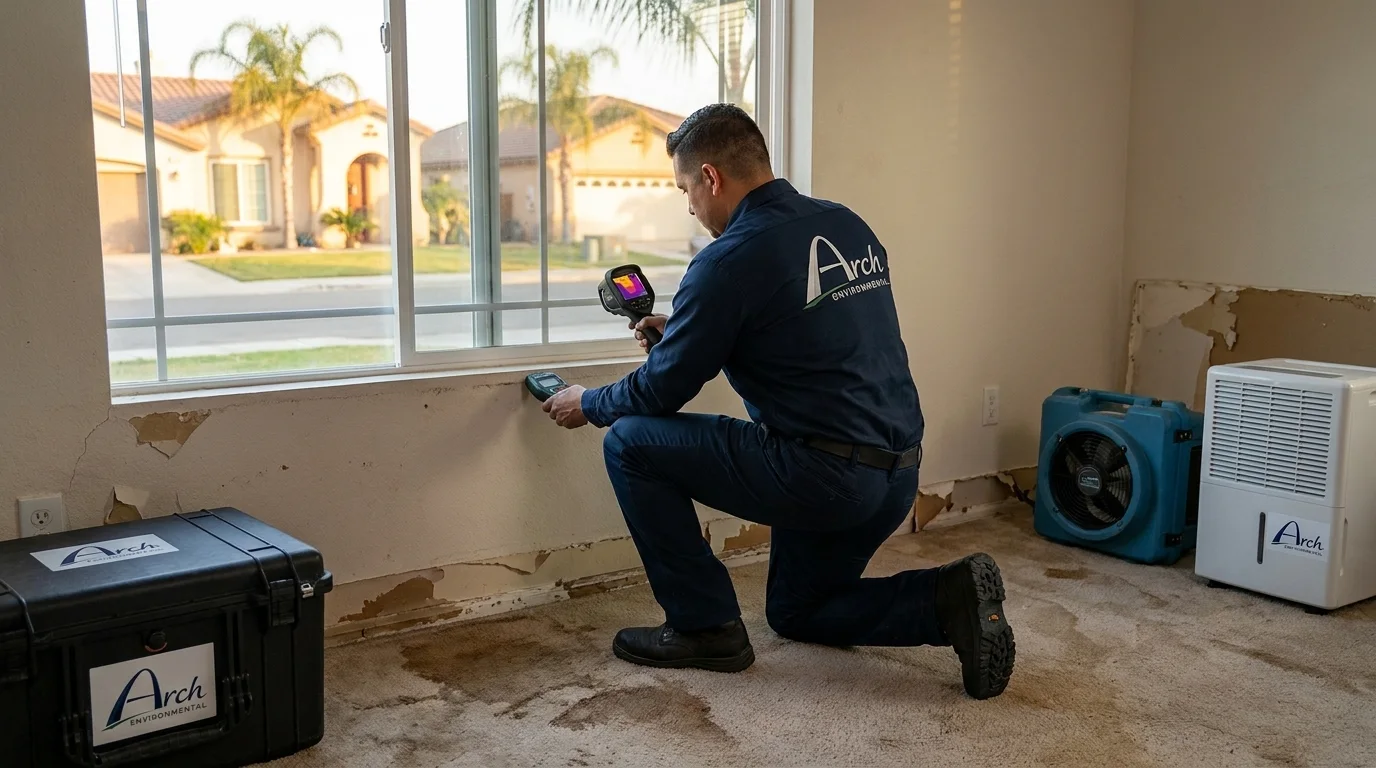
Many homes in the Easton area were built during mid-century agricultural expansion, when construction methods favored materials that absorb and hold moisture rather than shedding it. Stucco exteriors common to the region can trap water at the wall assembly for extended periods, reading dry at the surface while the substrate behind remains saturated. A visual inspection alone will miss this. Accurate moisture mapping using calibrated meters and thermal imaging is the only way to know where water actually traveled after a flood.
Our Post-Flood Mold Assessment Process
The assessment begins before any samples are collected. A thorough walkthrough documents the flood’s point of entry, the materials affected, and the extent of visible moisture migration. Readings are taken at multiple depths across affected rooms, because water follows framing cavities, plumbing chases, and HVAC ducts in ways that don’t always match the visible water line.
Air sampling captures what’s airborne and compares it to an outdoor baseline collected the same day under the same conditions. Surface sampling targets areas where visible growth or staining is present. All samples are analyzed by an accredited laboratory, and results are compiled into a written assessment report that documents findings, identifies affected zones, and outlines the scope of any remediation that may be warranted.
Arch Environmental Group’s certified team holds credentials as a Certified Asbestos Consultant and Lead Inspector Assessor, which matters in older Valley construction where a flood event can disturb legacy materials alongside mold. Knowing what else may be present in the wall system before remediation begins protects both the occupants and the workers doing the cleanup.
Reaching Easton from Kingsburg
Arch Environmental Group is based in Kingsburg, which sits a short drive south of Easton along Highway 99. The route is straightforward, and scheduling is handled directly by phone at (559) 296-2088. Because the brand context does not specify emergency after-hours availability, we encourage property owners to call during business hours to arrange prompt scheduling. Waiting even a day or two after a flood event to begin assessment allows mold to advance further into building materials, which typically expands the scope and cost of any remediation that follows.
Local Note
One pattern worth knowing in the Easton area: agricultural irrigation infrastructure throughout the Central Valley means that soil saturation levels near field edges and drainage channels can remain elevated well after a flood event appears to have receded. Homes situated near irrigation laterals or low-lying agricultural parcels may continue drawing moisture through slab foundations or crawl spaces even after surface water is gone. If your property is near active farmland or a drainage easement, mention that when you call, it affects how we approach the moisture mapping portion of the assessment and how long we expect the drying timeline to run before clearance testing is appropriate.
Insurance Documentation and Next Steps
A written mold assessment report from a certified professional is typically what insurance carriers require before approving remediation work. The report identifies affected materials, quantifies the extent of growth or contamination, and provides a scope that adjusters and remediation contractors can both work from. Arch Environmental Group produces documentation formatted to support the claims process, including photographs, moisture readings, and laboratory chain-of-custody records. If your carrier has questions about the methodology or findings, the report is written to answer them without requiring a follow-up site visit.
If you’ve experienced flooding in Easton and you’re not certain whether mold has taken hold, the safest course is an assessment before remediation begins rather than after. Call Arch Environmental Group at (559) 296-2088 to schedule your post-flood mold assessment and get a clear picture of what’s actually inside your walls.
Serving Easton from our Kingsburg headquarters — ★ 5.0 · 34 Google reviews
“I work a lot with Mike on all my projects that need asbestos and lead testing, him and Rob are great at what they do. Highly recommend.” — Fig, September 2026Read our reviews on Google →
Post-Flood Mold Assessment in Easton: Service Coverage
Frequently Asked Questions
How soon after a flood in Easton should I schedule a mold assessment?
Does the agricultural setting around Easton affect how mold assessments are conducted?
Can a post-flood mold assessment in Easton also check for asbestos or lead in older homes?
What does the mold assessment report include, and will my insurance carrier accept it?
What's the difference between air testing and surface sampling in a post-flood assessment?
Post-Flood Mold Assessment in Easton
Our crews are based in Kingsburg, CA and take on projects across Easton. Call for a free estimate.