TL;DR: Mold testing in Dinuba, CA involves collecting air or surface samples from your home or commercial property, sending them to an accredited laboratory, and comparing spore counts against an outdoor baseline. A certified inspector can tell you whether elevated mold levels are present, which species were found, and what conditions are driving growth. Testing takes one to two hours on-site; lab results typically return within 24 to 72 hours. If your inspector flagged moisture intrusion, you smell something musty in a room that never quite dries out, or you’re mid-transaction with a closing date approaching, a professional mold test gives you documented, defensible answers.
If your home inspector’s report came back with “possible microbial growth” near the bathroom subfloor and you have a week to decide whether to proceed with the purchase, a DIY swab kit from the hardware store is not going to give you what you need. The same is true if you’ve noticed a persistent musty smell in the back bedroom of your Dinuba home near Alta Avenue, or if a slow roof leak above the kitchen went undetected for longer than you realized. Professional mold testing produces a laboratory-analyzed report with specific spore counts, identified genera, and an outdoor comparison sample that makes the indoor numbers meaningful. That report is what a remediator needs to scope the work, and what a seller’s agent has to respond to.
What Does Mold Testing Actually Measure?
Mold testing measures the concentration and types of fungal spores present in your indoor air or on a surface, then compares those numbers to an outdoor baseline collected the same day. The outdoor sample is not optional: spore counts vary by season, weather, and the surrounding environment, and a Central Valley property near agricultural fields or orchards will have a naturally different ambient spore load than a suburban home in a wetter climate. Without that outdoor reference, an indoor number means very little.
The two most common sampling methods are air sampling and surface sampling. Air sampling uses a spore trap cassette, a small plastic cassette about the size of a matchbook, attached to a calibrated pump that pulls a measured volume of air through it over a set time. The cassette is sealed, labeled, and sent to an accredited laboratory where a microscopist counts and identifies spores under a microscope. Surface sampling uses a tape lift (pressing clear adhesive tape against a suspect area) or a swab to collect material directly from a discolored surface. Surface sampling tells you what is on that specific spot; air sampling tells you what is circulating through the breathing zone of the room.
For most residential inspections, a certified inspector collects two to five indoor air samples plus one outdoor baseline. The exact count depends on the size of the property and how many distinct concern areas exist. A single-story Dinuba ranch home with one suspect bathroom might need three samples total. A larger property with multiple HVAC zones, a crawl space, and an attic access point will need more.
For a deeper look at how these two methods compare and when each is the right call, see Air Sampling vs Surface Sampling for Mold: Which One Do You Actually Need?.
When Do You Actually Need a Mold Test?
You need a professional mold test when you have a specific reason to suspect elevated mold levels and need documented evidence to act on it. That covers more situations than people expect.
Real estate transactions. If a home inspection flags moisture, water staining, or suspect growth, a mold test during the option period gives the buyer documented leverage. The lab report is objective; a visual guess is not. Sellers benefit from testing too: a clean report removes a negotiating chip from the other side. Dinuba’s older housing stock, including many mid-century homes near the downtown core and the Kings River area, often has original plumbing and rooflines that have seen decades of deferred maintenance.
After a water event. A roof leak, a burst supply line, a slow drain pan overflow under the HVAC unit: any of these can establish the moisture conditions mold needs within 24 to 72 hours. Testing after a water event documents baseline conditions before remediation begins, and clearance testing afterward confirms the work was effective. For more on timing, see How Soon Should You Test for Mold After Water Damage?.
Unexplained health symptoms. The EPA notes that mold exposure can cause respiratory symptoms, eye irritation, and aggravated asthma in sensitive individuals. If occupants are experiencing symptoms that improve when they leave the building and worsen when they return, air quality testing that includes a mold panel is a reasonable next step. This is not a medical diagnosis, and a mold test cannot tell you whether mold caused a specific person’s symptoms. It can tell you whether mold is present at elevated levels.
Before or after renovation. Disturbing building materials in a property with hidden moisture intrusion can aerosolize spores that were previously contained. Testing before a renovation establishes a baseline; testing after confirms you did not spread contamination.
Musty odor with no visible source. Mold growing inside a wall cavity, under flooring, or above a drop ceiling produces a recognizable earthy or musty odor before it becomes visible. If you can smell it but cannot find it, air sampling can confirm whether elevated spore counts are present and give a remediator a starting point for investigation.
What Happens During a Professional Mold Inspection?
A professional mold inspection in Dinuba follows a consistent protocol. Here is what to expect from arrival to report delivery.
-
Pre-inspection walkthrough. The inspector walks the property with you, noting any visible staining, discoloration, condensation patterns, or areas of past water intrusion. They note HVAC locations, crawl space access, and any areas you have flagged as concerns.
-
Moisture mapping. A calibrated moisture meter is pressed against walls, floors, and ceilings at key locations. Elevated moisture readings in building materials tell the inspector where to focus sampling even when there is no visible growth. A thermal camera may be used to identify cool spots behind finished surfaces that indicate moisture accumulation.
-
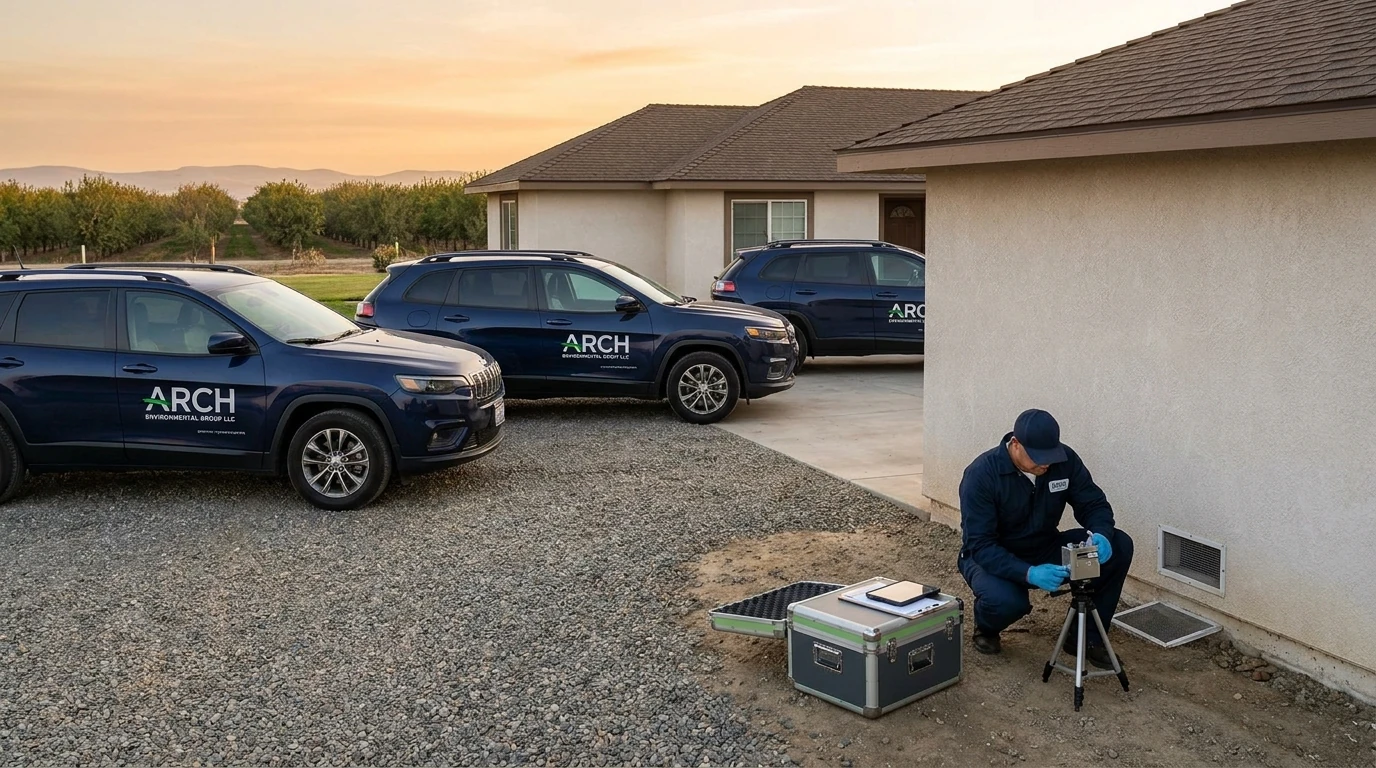
Sample collection. Air samples are collected using a calibrated pump and spore trap cassettes on a tripod, typically run for ten minutes per sample location. Surface samples, if warranted, are collected via tape lift or sterile swab. Each sample is labeled with a unique identifier, logged on a chain-of-custody form, and sealed for transport.
-
Outdoor baseline. One air sample is collected outside, away from HVAC exhausts and vegetation, to establish the ambient spore load for that day. This is the comparison point for every indoor sample.
-
Laboratory analysis. Samples go to an accredited third-party laboratory. Standard turnaround is 24 to 72 hours. Rush analysis (same-day or next-business-day) is available at most labs for an additional fee.
-
Report delivery and results review. The lab report lists spore counts by genus for each sample location alongside the outdoor baseline. A certified inspector translates those numbers into plain language: which rooms are elevated, which genera are present, and what conditions are likely driving the growth.
What Happens If the Results Come Back Elevated?
Elevated mold levels in the lab report mean you have documented evidence of a problem. The next step is remediation by a qualified, licensed remediation contractor, not the testing company. This distinction matters: an independent testing company has no financial stake in the outcome of the test. They are not selling you a remediation job. Their report works with any qualified contractor you choose to hire.
The remediation contractor scopes and performs the physical work: containment, removal of affected materials, treatment, and drying. Once they declare the work complete, an independent clearance test, new air samples collected by a third-party inspector and analyzed by an accredited lab, confirms that spore counts have returned to normal levels. Clearance testing should never come from the same company that did the remediation; the independence of the verification is the point.
Arch Environmental Group LLC handles both the initial mold testing and the post-remediation clearance testing for Dinuba and surrounding Kings County properties, so the chain of documentation stays consistent from first sample to final sign-off.
If results are normal, you have documented evidence of that too, which has its own value in a real estate transaction or an insurance context.
About Arch Environmental Group LLC
Arch Environmental Group LLC is an independent environmental testing company serving Dinuba, Kingsburg, Fresno, Visalia, and the surrounding Central Valley since 2026. Their certified inspectors hold credentials as a Certified Asbestos Consultant, Lead Inspector Assessor, and NIOSH 582 Microscopist. Services include mold inspection and testing, indoor air quality testing, asbestos testing, lead paint testing, water quality testing, clearance testing, radon testing, VOC and formaldehyde testing, allergen testing, HVAC and duct assessments, post-flood mold assessment, sewage contamination assessment, remediation oversight, environmental site assessments, compliance consulting, and litigation support sampling. All samples are analyzed by accredited third-party laboratories. Reach them at (559) 296-2088.