
Litigation Support and Forensic Sampling in Kingsburg
Certified litigation support and forensic sampling in Kingsburg and surrounding areas. Independent inspections, accredited lab analysis, clear written reports. Call (559) 296-2088.
When a tenant files a habitability complaint, a landlord disputes a mold claim, or a property sale collapses over an undisclosed environmental condition, the outcome often turns on one question: what does the sampling data actually show, and can it hold up under cross-examination? Standard inspection reports written for remediation contractors are not built for that environment. Forensic sampling for litigation is a different discipline entirely: chain-of-custody documentation, defensible sampling protocols, laboratory accreditation, and an expert who can explain methodology to a judge or opposing counsel without flinching.
What litigation support and forensic sampling actually involves
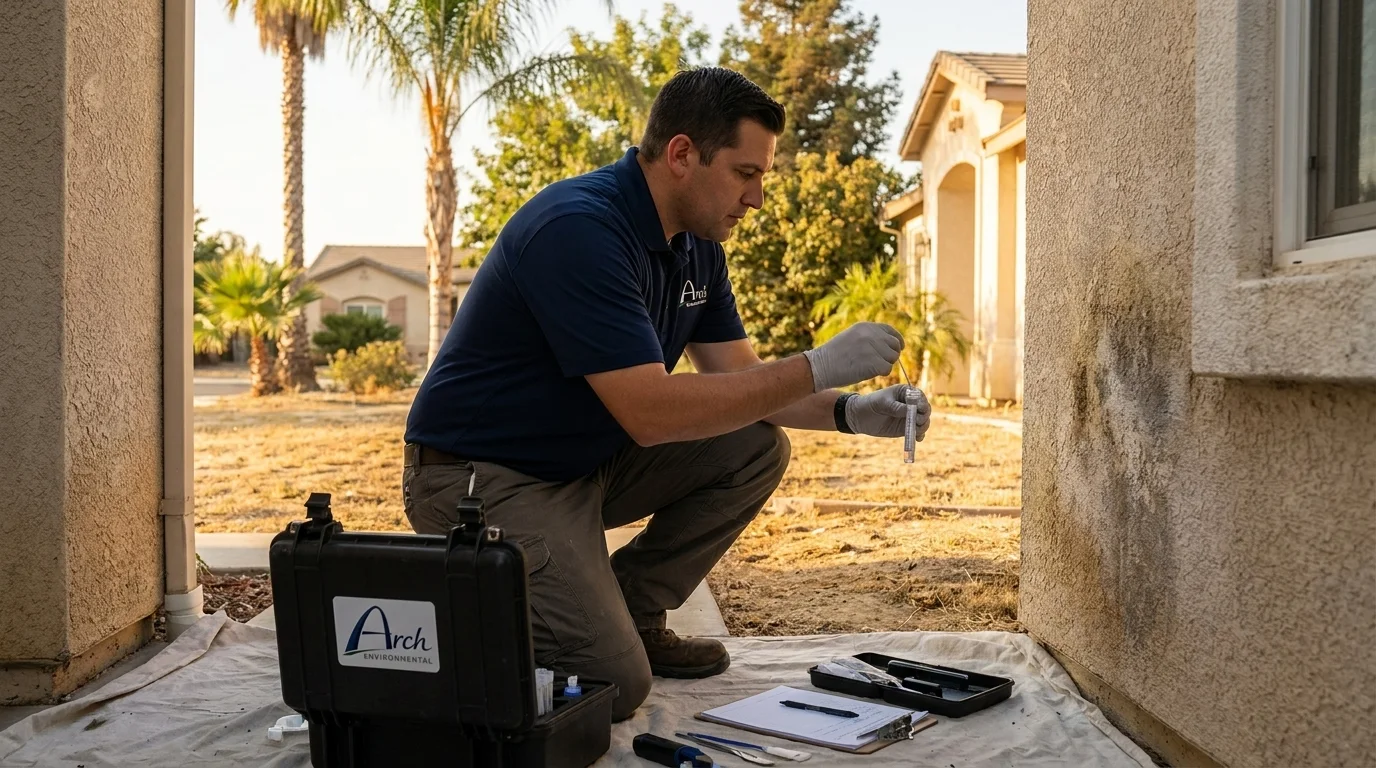
Forensic environmental sampling is the process of collecting physical evidence, air samples, bulk material samples, surface swabs, dust composites, or soil cores, under conditions that preserve their evidentiary value. Every decision, from which sampling method to use (spore trap vs. PCR, bulk vs. tape lift vs. swab) to where exactly samples are collected, is made with one question in mind: will this data survive a Daubert challenge or a deposition?
The work spans both sides of disputes. In tenant-landlord mold cases, forensic sampling can establish whether elevated spore counts existed before a remediation attempt, whether the remediation was adequate, or whether a landlord’s claim that conditions were “normal” is supported by the numbers. In real estate disclosure disputes, it documents what was present at a specific point in time. In construction defect litigation, it can trace moisture intrusion pathways to specific building failures.
Arch Environmental Group holds certifications as a Certified Asbestos Consultant and Lead Inspector/Assessor, with NIOSH 582 microscopist credentialing, the analytical background that allows in-house review of fiber and particulate data rather than relying solely on third-party lab interpretation.
Our process
-
Case review and sampling design. Before a single sample is collected, the legal theory of the case shapes the protocol. Which contaminants are at issue? What time period matters? What comparison or baseline data exists? The sampling plan is documented in writing so it can be produced in discovery.
-
Chain-of-custody documentation. Each sample is labeled, logged, and transferred under a documented chain of custody from collection through laboratory receipt. Field notes record exact collection locations, environmental conditions, sampling equipment, and the identity of everyone present. This documentation is what opposing counsel will scrutinize first.
-
Sample collection using defensible methods. Air samples, bulk samples, surface lifts, and wipe samples are collected following published methodologies (ASTM, NIOSH, EPA, or AIHA guidance, depending on the contaminant). Sampling locations are photographed and mapped. Blanks and field duplicates are collected where the case warrants it.
-
Accredited laboratory analysis. Samples are submitted to accredited analytical laboratories (AIHA-LAP or NVLAP accredited, depending on matrix). Lab reports, QA/QC data, and method detection limits are retained as part of the case file.
-
Expert report and testimony support. Findings are summarized in a written report structured for legal use, clear methodology, data tables, interpretation, and conclusions stated to a reasonable degree of scientific certainty. Expert witness testimony, deposition support, and rebuttal review of opposing expert reports are available as the case requires.
What separates a good forensic sampling response from a bad one
The most common failure in environmental litigation is sampling that was collected for remediation purposes being introduced as forensic evidence. Remediation sampling answers the question “is there a problem here?” Forensic sampling answers “what was here, when, how much, and why?”, and does so in a way that can be defended line by line.
Specific problems that surface in litigation:
- No chain of custody. Without it, opposing counsel can argue samples were mislabeled, contaminated, or collected from the wrong location. Courts have excluded evidence on this basis alone.
- Inappropriate sampling method for the contaminant. Spore trap air sampling misses non-sporulating fungal fragments; PCR-based analysis may be required to characterize certain exposures. Using the wrong method gives opposing experts an easy target.
- Missing background or comparison data. A single elevated spore count means little without outdoor reference samples collected the same day under the same weather conditions. Omitting comparators is a routine error in non-forensic inspections.
- Conclusions that exceed the data. Stating that a property “caused” a health outcome goes beyond what environmental sampling can establish. Reports that overreach invite successful Daubert motions.
- Inadequate documentation of sampling locations. If a report says “bedroom” but cannot produce a floor plan with exact coordinates and photographs, the data is difficult to defend.
What does litigation support and forensic sampling cost?
Forensic environmental sampling is priced by scope, the number and type of samples, the contaminants being analyzed, laboratory turnaround requirements, and whether expert witness time is needed beyond the written report. Typical costs in the industry run as follows:
| Scenario | Typical industry range |
|---|---|
| Single-room mold forensic sampling (air + surface, legal documentation) | $800 – $2,200 |
| Multi-room habitability investigation (tenant-landlord dispute) | $2,000 – $6,500 |
| Asbestos or lead forensic sampling for disclosure dispute | $1,200 – $4,000 |
| Full property forensic investigation (construction defect or real estate litigation) | $4,500 – $15,000+ |
| Expert witness report preparation | $1,500 – $5,000 |
| Deposition or trial testimony (per day) | $2,500 – $7,500 |
Every case is different, and Arch Environmental Group provides a written scope of work before any sampling begins so there are no surprises. Homeowners insurance does not typically cover forensic sampling retained for litigation purposes, though it may cover underlying remediation costs if the loss is a covered peril, your coverage attorney or public adjuster can clarify what applies to your specific claim.
Seasonal and regional considerations
In California’s San Joaquin Valley, the combination of hot dry summers and wet winters creates a predictable mold cycle: moisture intrudes during the rainy season (November through March), and elevated spore counts often peak in spring before drying conditions suppress visible growth, while hidden colonization behind drywall and under flooring continues. Forensic sampling timed to a dispute’s filing date may or may not capture peak conditions, which is why historical moisture data, weather records, and prior inspection reports become important supporting evidence. Kingsburg and surrounding Valley communities also have a significant stock of older rental housing where deferred maintenance and inadequate vapor barriers are recurring factors in habitability disputes.
Service area
Arch Environmental Group is based in Kingsburg, CA and provides litigation support and forensic sampling throughout the surrounding San Joaquin Valley, including Fresno, Visalia, Hanford, Tulare, Selma, Reedley, Clovis, and Sanger. City-specific service pages link back here for detailed methodology.
If you are facing a mold dispute, habitability claim, or environmental disclosure question and need sampling data that will hold up in court, call Arch Environmental Group at (559) 296-2088 to discuss a forensic sampling scope for your case.
Frequently Asked Questions
Does homeowners insurance cover litigation support and forensic sampling?
What is the difference between a standard mold inspection report and a forensic mold investigation report?
What sampling methods are used in tenant-landlord mold disputes, and how does the choice of method affect the case?
What is chain of custody, and why does it matter in an environmental litigation case?
Can Arch Environmental Group serve as an expert witness, or only as a sampling consultant?
Looking for the best litigation support and forensic sampling company in Kingsburg?
Arch Enviornmental Group LLC provides litigation support and forensic sampling in Kingsburg, CA and the surrounding area, and has served local property owners since 2026. Customers rate us 5.0 out of 5 stars across 34 Google reviews. Call (559) 296-2088 to schedule litigation support and forensic sampling or request a free estimate.
Schedule Litigation Support and Forensic Sampling
Independent, lab-verified testing across Kingsburg and California's Central Valley.
Related Coverage
- Our Environmental Testing Services
- Contact Arch Enviornmental Group LLC
- Litigation Support and Forensic Sampling in Clovis
- Litigation Support and Forensic Sampling in Dinuba
- Litigation Support and Forensic Sampling in Fowler
- Litigation Support and Forensic Sampling in Fresno
- Litigation Support and Forensic Sampling in Reedley
- Litigation Support and Forensic Sampling in Sanger
- Litigation Support and Forensic Sampling in Selma
- Litigation Support and Forensic Sampling in Visalia