
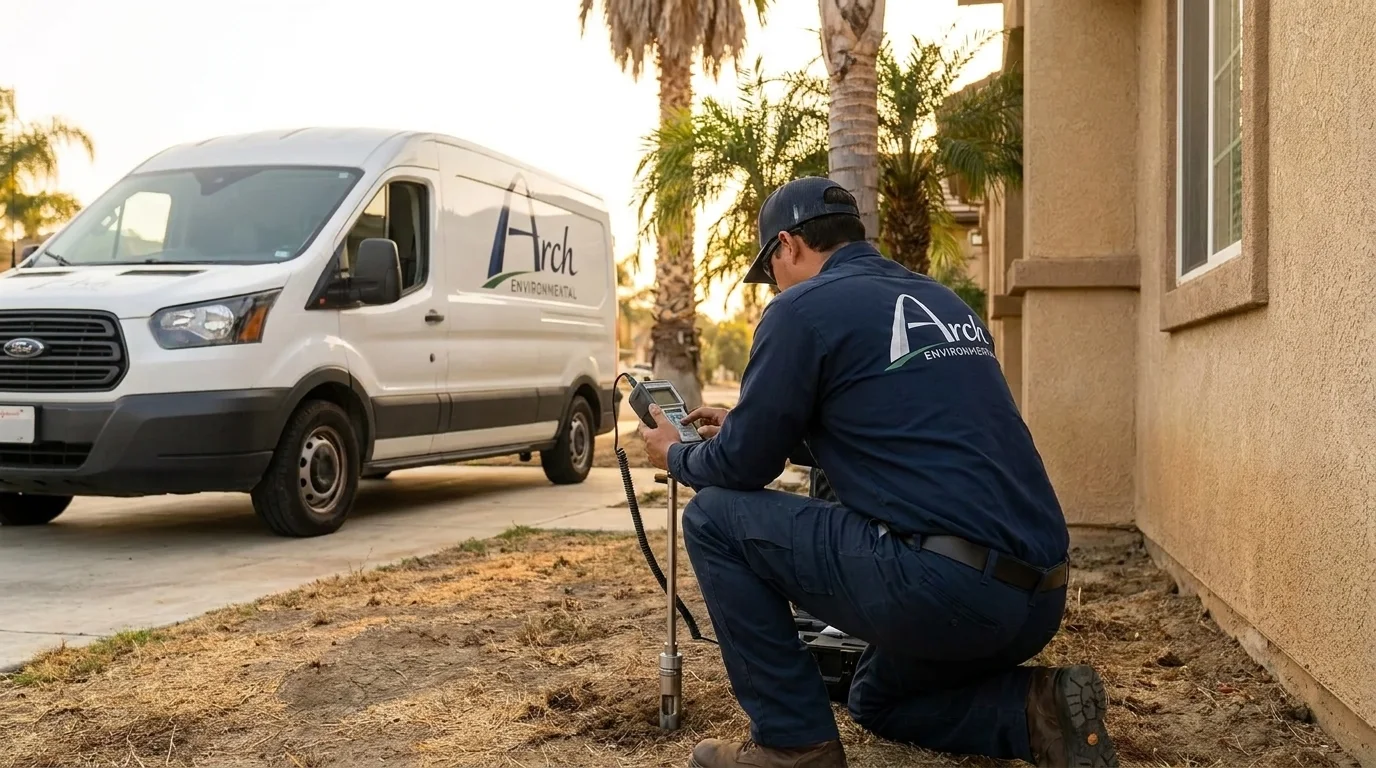
Environmental Site Assessments in Tulare
Certified environmental site assessments in Tulare, CA. Independent inspections with accredited lab analysis. Call (559) 296-2088.
Our crews are dispatched from our Kingsburg, CA headquarters and respond quickly to projects across Tulare.
Tulare sits at the heart of one of the most agriculturally intensive corridors in the San Joaquin Valley, and that history leaves a chemical fingerprint on the land. Decades of pesticide application, fertilizer storage, fuel handling at packing houses, and the steady churn of industrial and agricultural land-use transitions mean that commercial properties here carry environmental risk profiles that differ meaningfully from urban markets. Whether you are acquiring a former ag-supply depot, refinancing a warehouse near the rail corridor, or repositioning a retail strip, an environmental site assessment is not a formality, it is the document that tells you what you are actually buying.
Why Tulare Commercial Properties Carry Distinct Environmental Risk
The San Joaquin Valley’s agricultural economy shaped Tulare’s land use for well over a century, and the residue of that activity does not disappear when a parcel is rezoned. Properties that once supported pesticide mixing and loading operations, underground fuel storage for farm equipment, or chemical distribution can retain soil and groundwater contamination long after those uses ended. Organochlorine pesticides, petroleum hydrocarbons, and nitrate loading from historical fertilizer use are recurring concerns in Phase I records searches for Tulare-area parcels.
The region’s clay-heavy soils compound the issue. Slow-draining Tulare series soils can trap contaminants near the surface rather than flushing them through, which means a spill from decades ago may still be sitting where it landed. At the same time, shallow groundwater in parts of Tulare County means that what stays in the soil does not always stay out of the water table. A Phase I ESA that accounts for these regional soil and hydrogeological conditions gives buyers and lenders a far more useful picture than a generic checklist.
Our Environmental Site Assessment Process in Tulare
A Phase I Environmental Site Assessment follows the ASTM E1527-21 standard and consists of four core components: a review of historical records and regulatory databases, a site reconnaissance, interviews with owners and occupants, and a written report with conclusions on Recognized Environmental Conditions (RECs). In Tulare, the historical records review often requires looking back at aerial photography from the mid-20th century to trace agricultural chemical storage, irrigation infrastructure, and prior industrial tenants that may not appear in standard regulatory databases.
The site reconnaissance in this market means paying close attention to staining patterns on concrete slabs, the presence of vent pipes or fill ports that may indicate legacy underground storage tanks, and proximity to irrigation canals or drainage ditches that could serve as migration pathways for off-site contamination. When a Phase I identifies RECs that warrant further investigation, a Phase II assessment moves to soil sampling, groundwater monitoring, and laboratory analysis, giving you the data a lender, a regulator, or a remediation contractor actually needs to act on.
Arch Environmental Group holds certifications as a Certified Asbestos Consultant and Lead Inspector Assessor, and our team includes a NIOSH 582 Microscopist. For commercial properties with structures built before 1980, common in Tulare’s older downtown and industrial blocks, those credentials matter when a Phase I reconnaissance surfaces building-material concerns that need to be evaluated alongside soil and groundwater risk.
Reaching Tulare from Kingsburg
Arch Environmental Group is based in Kingsburg, which sits roughly 30 miles north of Tulare via Highway 99. For scheduled site reconnaissance visits, that corridor is a straightforward run. Tulare’s commercial and industrial properties cluster along the 99 corridor, around the Tulare Industrial Park area, and near the BNSF rail line that bisects the city, all of which are accessible without navigating significant surface-street delays from the highway. We coordinate site visit scheduling directly with property owners, tenants, or brokers to confirm access and minimize disruption to ongoing operations.
Local Note: The Packing House and Cold Storage Legacy
One pattern that shows up repeatedly in Tulare-area Phase I work is the legacy of fruit and vegetable packing houses and cold storage facilities. Many of these operations used ammonia refrigeration systems, and some used chlorinated solvents for cleaning and equipment maintenance. When a commercial property’s chain of title runs through a packing or cold storage use, even decades back, that history warrants careful scrutiny of regulatory agency records and a thorough site walk. The footprint of a former refrigeration equipment room or a below-grade cold storage vault is not always obvious from a current site visit, but it can carry significant liability for a new owner who did not ask the right questions before closing.
If you are evaluating a property in Tulare and the historical use is unclear, that ambiguity itself is worth documenting. A well-executed Phase I does not just flag known problems, it establishes the due diligence record that protects you if a problem surfaces later.
For environmental due diligence on Tulare commercial and industrial properties, contact Arch Environmental Group at (559) 296-2088 to discuss your timeline, the property’s history, and what level of assessment your transaction requires.
Serving Tulare from our Kingsburg headquarters — ★ 5.0 · 34 Google reviews
“Arch Environmental did mold testing at my place in Visalia. They were fast and great to work with.” — Alicia, September 2026Read our reviews on Google →
Environmental Site Assessments in Tulare: Service Coverage
Frequently Asked Questions
How does Tulare's agricultural land-use history affect what a Phase I ESA needs to cover?
Are properties near Tulare's rail corridor or industrial areas more likely to have Recognized Environmental Conditions?
When does a Phase I ESA in Tulare lead to a Phase II investigation?
How do Tulare's clay soils affect Phase II sampling strategy?
What does an ESA report cost for a commercial property in Tulare, and who typically pays for it?
Environmental Site Assessments in Tulare
Our crews are based in Kingsburg, CA and take on projects across Tulare. Call for a free estimate.