
If your home or building was constructed before the mid-1980s and you’re planning a renovation, you need an asbestos test before any demolition work begins, full stop. Asbestos-containing materials (ACMs) were used in hundreds of building products through the late 1970s, and many remained in use into the early 1980s. Disturbing them without knowing what you’re dealing with can release microscopic fibers that lodge permanently in lung tissue. The test itself is straightforward and relatively inexpensive. Skipping it is not a shortcut, it’s a liability that can halt your project, trigger regulatory fines, and create a genuine health hazard for everyone on-site.
What Asbestos Is Actually Doing in Your Building
Asbestos isn’t a single material, it’s a group of naturally occurring silicate minerals that were prized for their heat resistance, tensile strength, and low cost. Manufacturers wove or mixed asbestos into dozens of building products: floor tiles and the mastic adhesive beneath them, ceiling tiles, pipe insulation, duct wrap, roofing shingles, joint compound, textured “popcorn” ceiling coatings, and even some plaster mixes.
In California’s Central Valley, including the Kingsburg area, residential construction from the postwar boom through the late 1970s leaned heavily on these materials. Ranch-style homes built in that era commonly have asbestos floor tile under carpet, asbestos-containing drywall compound in the walls, and wrapped pipes in the attic or crawl space. None of that is dangerous while it sits undisturbed. The hazard is created the moment someone cuts, sands, drills, or demolishes it.
Asbestos fibers are invisible to the naked eye and have no odor. You cannot identify an ACM by looking at it. A laboratory test is the only way to know.
What the Testing Process Actually Looks Like
Professional asbestos testing involves two stages: bulk sampling and laboratory analysis.
A certified inspector collects small physical samples, typically a chip of tile, a scraping of joint compound, a sliver of pipe insulation, from the materials that will be disturbed during your renovation. Each sample is sealed, labeled, and sent to an accredited laboratory for polarized light microscopy (PLM) analysis, which can identify asbestos fiber type and concentration.
Here’s what to expect:
- Pre-inspection review. The inspector reviews your renovation scope to identify which materials are in the work zone and which are likely ACM candidates based on age and type.
- Sampling. Each suspect material category gets sampled. A small renovation might require 5–10 samples; a full gut-renovation of an older home can require significantly more.
- Lab turnaround. Standard turnaround is typically a few business days. Rush analysis is available when timelines are tight.
- Written report. You receive a report identifying which materials contain asbestos, at what concentration, and, if applicable, their condition (friable vs. non-friable).
If results come back negative, your contractor gets a green light. If results are positive, you know exactly which materials require professional abatement before demo begins, and you can plan accordingly rather than discovering the problem mid-project.
What Happens When You Skip the Test
This is where the real cost of skipping becomes clear, and it compounds fast.
During the project: A contractor who unknowingly sands asbestos-containing joint compound or cuts through asbestos floor tile creates an airborne contamination event. Fibers settle on every surface in the work area and can migrate through HVAC systems into the rest of the building. The job stops. Remediation, cleaning, air monitoring, potentially sealing off sections of the structure, becomes necessary before any other work can resume.
Regulatory exposure: In California, the Air Resources Board and Cal/OSHA have specific requirements governing asbestos disturbance in renovation and demolition work. Contractors who disturb ACMs without proper notification, testing, and controls face significant penalties. If you’re the property owner, you can share in that liability.
Health consequences: Mesothelioma, asbestosis, and lung cancer linked to asbestos exposure typically don’t appear for decades after exposure, which is precisely what makes a single renovation event so insidious. There’s no safe level of exposure established for asbestos, and no medical intervention that reverses fiber accumulation in lung tissue.
Resale and disclosure: California requires sellers to disclose known material defects. If a future inspection or buyer’s testing reveals that asbestos was disturbed without proper abatement during a prior renovation, that becomes a disclosure issue, and potentially a legal one.
The cost of testing is a fraction of the cost of any one of these outcomes.
What NOT to Do Before You Have Results
While you’re waiting on test results, or if you suspect a material might contain asbestos, there are a few things to avoid:
- Don’t sand, scrape, or drill into suspect materials. This includes popcorn ceilings, old floor tiles, and textured drywall surfaces.
- Don’t use a shop vac to clean up debris from a material that might be an ACM. Standard vacuums exhaust fibers back into the air; only HEPA-filtered equipment is appropriate.
- Don’t assume age rules it out. Some asbestos-containing products were manufactured into the 1980s, and older homes sometimes received renovation materials during that window.
- Don’t rely on visual inspection alone. No contractor, no matter how experienced, can identify an ACM without lab analysis.
If you’ve already disturbed a material and are now concerned it may contain asbestos, stop work, limit access to the area, and contact a certified asbestos professional before doing anything else.
When to Call a Certified Asbestos Professional
You need a professional for both the testing and, if ACMs are found, the abatement. These are not DIY tasks.
In California, asbestos inspectors and abatement contractors must hold specific certifications through the California Department of Public Health (CDPH). When you’re vetting a firm, ask to see their CDPH certification and confirm it’s current.
Call before:
- Any renovation involving walls, ceilings, or floors in a pre-1985 structure
- Roof replacement on a home built before the mid-1980s
- HVAC duct work or pipe insulation removal
- Any demolition, partial or full
Call immediately if:
- A contractor has already disturbed a material you now suspect is an ACM
- You’ve purchased an older property and have no documentation of prior testing
- You’re preparing a property for sale and want a clean record
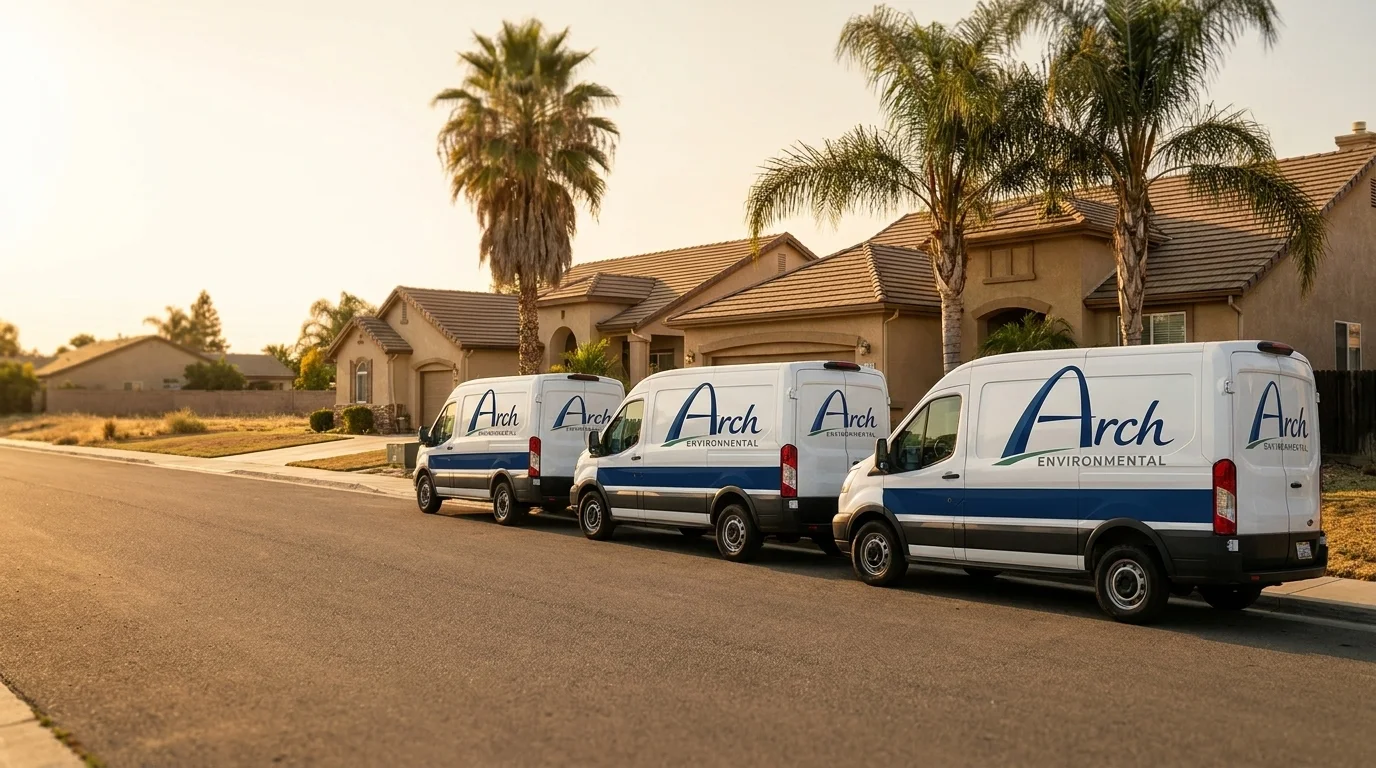
Arch Environmental Group serves the Kingsburg area and the broader Central Valley. If you’re planning a renovation and want to know what you’re working with before the first hammer swings, reach out at (559) 296-2088 to discuss asbestos testing for your project.
The Bottom Line
An asbestos test before renovation isn’t bureaucratic box-checking, it’s the difference between a project that proceeds on schedule and one that gets shut down mid-demo, with contaminated materials and no clear path forward. In a region where mid-century housing stock is common, the question isn’t really whether to test. It’s whether to find out before the work starts or after.